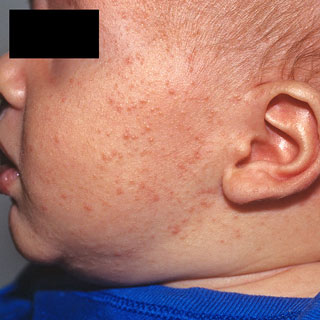
Is this your child's symptom?
- Pimples and blackheads on the face caused by blocked oil glands
Symptoms of Acne
- Whiteheads (pimples) are plugged oil glands that are closed.
- Blackheads are plugged oil glands that are open. Reason: the oil turns black when it is exposed to air.
- Whiteheads and blackheads are also called "zits."
- Red bumps are from blocked oil glands that have leaked oil. This causes irritation in the skin around them. Larger red bumps can be quite painful.
- Acne mainly appears on your face, neck, and shoulders
Causes of Acne
- Acne skin changes are from plugged oil glands. Acne has several causes.
- Increased levels of hormones during puberty have a part. Heredity also plays an important role.
- Some skin bacteria can make it worse.
- Acne is not caused by diet. You do not need to avoid eating fried foods, chocolate, or any other food.
- Acne is not caused by dirt or by not washing your face often enough.
When to Call for Acne
Call Doctor or Seek Care Now
|
Contact Doctor Within 24 Hours
Contact Doctor During Office Hours
|
Self Care at Home
|
Call Doctor or Seek Care Now
- Spreading red area around the acne with fever
- Spreading red area or streak that's very large
- Your child looks or acts very sick
Contact Doctor Within 24 Hours
- Spreading red area or streak around the acne, but no fever
- You think your child needs to be seen
Contact Doctor During Office Hours
- Tender red lumps that are large occur
- Yellow soft scab that drains pus or gets bigger occurs
- After treating with Benzoyl Peroxide (BP) for 2 months, acne not improved
- BP makes the face itchy or swollen
- You have other questions or concerns
Self Care at Home
- Mild acne
Care Advice for Acne
What You Should Know About Acne:
- More than 90% of teenagers have some acne. Acne is a normal part of the teen years.
- There is no medicine at this time that will cure acne.
- However, good skin care can keep acne under control and at a mild level.
- Here is some care advice that should help.
Benzoyl Peroxide Gel:
- Benzoyl Peroxide (BP) is the best OTC medicine for bringing acne under control. Use a Benzoyl Peroxide 2.5% gel product (such as the store brand). OTC means no prescription is needed.
- It helps to open pimples and to unplug blackheads. It also kills bacteria.
- Apply the lotion once a day at bedtime to the area with acne. Redheads and blonds should apply it every other day for the first 2 weeks. Reason: more sensitive skin.
- Use an amount of lotion the size of a pea. This should be enough to cover most of the acne.
- If the skin becomes red or peels, use less of it. Other option: You can use it less often.
- Caution: avoid the corners of the eyes, nose and mouth. Reason: these areas are very sensitive.
- Caution: Benzoyl Peroxide bleaches clothing, towels, blankets, etc. Apply it only at bedtime and put it on sparingly. Use a plain white pillowcase.
Antibiotics for Red Bumps:
- Large red bumps mean the infection has spread beyond the oil gland. If you have several red bumps, your doctor may prescribe an antibiotic.
- Antibiotics come as solutions for the skin or as pills.
- The antibiotic will kill the bacteria that are causing the infection.
- Give the antibiotic as directed.
Washing the Face:
- Wash your skin twice a day. The most important time to wash is bedtime. Just use warm water or you can use a mild soap (such as Dove).
- Shampoo your hair daily.
- Avoid scrubbing your skin. Reason: hard scrubbing of the skin irritates the openings of the oil glands. This causes them to close off even more tightly.
Pimple Opening:
- Opening (popping) pimples is not advised by many doctors. But, most teens and adults do it anyway.
- So, here's how to open a pimple safely without any squeezing.
- Never open a pimple before it has come to a head.
- Wash your face and hands first.
- Use a sterile needle (cleaned with rubbing alcohol). Nick the surface of the yellow pimple with the tip of the needle. The pus should run out without squeezing.
- Wipe away the pus and wash the area with soap and water.
- Opening small pimples in this way will not cause skin damage.
Avoid Picking or Squeezing Acne:
- Many young people pick at their acne when they are not thinking about it. Picking makes acne worse.
- Try not to touch the face at all during the day.
- Squeezing blackheads causes bleeding into the skin. The bleeding turns into brownish blotches on the skin. They can take 1 or 2 months to fade.
- Squeezing red lumps can force bacteria into the skin. This too leaves blotches. It can also cause a serious face infection.
Prevention - Avoid Triggers of Acne:
- Avoid putting any oily or greasy substances on your face. Reason: They block oil glands and make acne worse. If you use cosmetics, use water-based cosmetics.
- Avoid hair tonics or hair creams (especially greasy ones). When you sweat, they will get on the face and irritate the acne.
What to Expect:
- With treatment, new whiteheads and blackheads will decrease. But, it takes 6 to 8 weeks.
- Acne usually lasts until age 20 or 25.
- So, you will need to continue the treatment for several years.
- You don't need to worry about scarring. It is very rare for acne to leave any scars.
Call Your Doctor If:
- With treatment, the acne has not improved after 2 months
- It looks infected (large, red, tender bumps)
- You think your child needs to be seen
- Your child becomes worse