Is this your child's symptom?
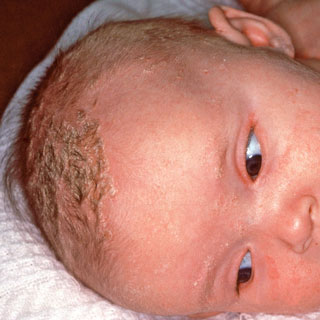
- A scaly rash on the scalp that starts in newborns
Symptoms of Cradle Cap
- Yellow scales and crusts attached to the scalp
- Occurs in patches
- Scales can be greasy or dry
- Not itchy or painful
- Begins in the first 2 to 6 weeks of life
Cause of Cradle Cap
- Cradle cap is probably caused by hormones from the mother. These hormones cross the placenta before birth. The hormones cause the oil glands in the skin to become overactive. They then release more oil than normal.
- Dead skin cells normally fall off. The extra oil causes these cells to "stick" to the skin. These cells form yellow crusts and scales on the scalp.
When to Call for Cradle Cap
Call Doctor or Seek Care Now
|
Contact Doctor Within 24 Hours
Contact Doctor During Office Hours
|
Self Care at Home
|
Call Doctor or Seek Care Now
- Baby less than 1 month old with tiny water blisters or pimples in a cluster
- Your child looks or acts very sick
Contact Doctor Within 24 Hours
- Baby less than 1 month old with any water blisters or pimples
- You think your child needs to be seen
Contact Doctor During Office Hours
- Raw rash behind the ears
- Rash spreads beyond the scalp
- Cradle cap gets worse with treatment
- Cradle cap lasts longer than 12 months
- You have other questions or concerns
Self Care at Home
- Mild cradle cap
Care Advice for Cradle Cap
What You Should Know About Cradle Cap:
- Cradle cap is a common skin condition of newborns.
- It's caused by overactive oil glands in the scalp.
- It's harmless and will go away on its own. But it takes time.
- Here is some care advice that should help.
Shampoo Daily:
- Wash the hair with an anti-dandruff shampoo (such as Head and Shoulders). Do this twice a week. No prescription is needed. Note: the daily use of anti-dandruff shampoo isn't approved until after 2 years old. But, using it twice a week is fine.
- On the other days, wash the hair with baby shampoo.
Scalp Massage:
- While the hair is lathered, massage the scalp with a soft brush. You can also use a rough washcloth or your fingers for 5 minutes. Don't worry about hurting the soft spot.
Baby Oil:
- If the scalp has thick crusts (scales), put some baby oil on the scalp. Do this for 15 minutes before shampooing to soften the crusts.
- Wash all the oil off, however, or it may worsen the cradle cap. Reason: the oil blocks the oil glands on the baby's scalp.
- Do not use olive oil. Reason: may increase the growth of yeast.
- Cradle cap lotions for loosening up the scales are also available without a prescription. Apply the lotion 15 minutes before shampooing.
Steroid Cream:
- If the rash on the scalp is red and irritated, use 1% hydrocortisone cream. An example is Cortaid. No prescription is needed.
- Put this on once a day.
- After 1 hour, wash it off with soap and water.
- Do this for 7 days or less.
Expected Course:
- Cradle cap will eventually go away on its own between 6 and 12 months of age. Usually, it doesn't cause any symptoms (such as pain or itching).
- Therefore, treatment is optional. It is mainly done for cosmetic reasons.
- Shampoos, lotions and brushing will reduce the thickness of the scales. They will usually make them go away sooner.
Return to Child Care:
- Cradle cap cannot be spread to others.
- Your child does not need to miss any child care.
Call Your Doctor If:
- Gets worse with treatment
- Lasts over 12 months of age
- You think your child needs to be seen