Is this your child's symptom?
- Injuries to the head
- Includes the scalp, skull and brain
Types of Head Injuries
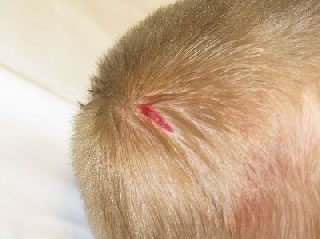
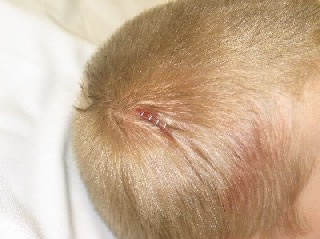
- Scalp Injury. Most head injuries only damage the scalp. Examples are a cut, scrape, bruise or swelling. It is common for children to fall and hit their head while growing up. This is especially common when a child is learning to walk. Big lumps (bruises) can occur with minor injuries. This is because there is a large blood supply to the scalp. For the same reason, small cuts on the head may bleed a lot. Bruises on the forehead sometimes cause black eyes 1 to 3 days later. This is caused by blood spreading downward by gravity.
- Skull Fracture. Only 1% to 2% of children with head injuries will get a skull fracture. Most often, there are no other symptoms except for a headache. The headache occurs at the site where the head was hit. Most skull fractures occur without any injury to the brain. They heal easily.
- Concussion. A concussion is a type of brain injury. It causes a change in how the brain works for a short time. It is usually caused by a sudden blow or jolt to the head. Most children bump or hit their heads without causing a concussion. The most common signs are a brief period of confusion or memory loss. This happens after the injury. Other signs of a concussion can include a headache or vomiting. Dizziness or acting dazed can also be signs. A person does not need to be knocked out to have had a concussion. Following a concussion, some children have ongoing symptoms. These can include headaches, dizziness or thinking difficulties. School problems or emotional changes can occur. These symptoms can last for several weeks.
- Brain Injuries (Serious)
are uncommon. This includes bleeding, bruises or swelling within the brain. They are suspected by the symptoms listed below:
- Hard to wake up or keep awake or
- Acts or talks confused or
- Slurred speech or
- Weakness of arms or legs or
- Walking is not steady.
- These symptoms are an emergency. If they happen, call 911.
Concussion Treatment
- Treating a concussion requires both Physical Rest and Brain Rest.
- Brain rest means a gradual return to full studying and school attendance.
- Physical rest means a gradual return to normal activity, work and gym class.
- If symptoms occur (like a headache), the child needs to return to the previous level of physical and mental activity. In 24 hours, they can try again to take it to the next level.
- Athletes involved in sports need to have a stepwise plan for "return to play." Progressing through stages should be supervised by a doctor or athletic trainer.
Pain Scale
- Mild: your child feels pain and tells you about it. But, the pain does not keep your child from any normal activities. School, play and sleep are not changed.
- Moderate: the pain keeps your child from doing some normal activities. It may wake him or her up from sleep.
- Severe: the pain is very bad. It keeps your child from doing all normal activities.
When to Call for Head Injury
Call 911 Now
Go to ER Now
Call Doctor or Seek Care Now
|
Contact Doctor Within 24 Hours
Contact Doctor During Office Hours
|
Self Care at Home
|
Call 911 Now
- Seizure occurred
- Knocked out (unconscious) for more than 1 minute
- Not moving neck normally. Caution: protect the neck from any movement.
- Hard to wake up
- Acts or talks confused or slurred speech present now
- Walking not steady or weakness of arms/legs present now
- Major bleeding that can't be stopped
- You think your child has a life-threatening emergency
Go to ER Now
- Mild concussion suspected (awake but not alert, not focused, slow to respond)
- Neck pain after head injury
- Had confused talking, slurred speech, unsteady walking or weakness of arms/legs but fine now
- Blurred or double vision lasted more than 5 minutes
- Injury caused by high speed (car crash)
- Vomited 2 or more times
- Severe headache or crying that won't stop
- Can't remember what happened or store new memories
- Large deep cut that will need many stitches
Call Doctor or Seek Care Now
- Age less than 1 year old
- Knocked out (unconscious) for less than 1 minute
- Skin is cut and No past tetanus shots. Note: tetanus is the "T" in DTaP, TdaP, or Td vaccines.
- Skin is split open or gaping and may need stitches
- Bleeding that won't stop after 10 minutes of direct pressure
- Large swelling (larger than 1 inch or 2.5 cm)
- Large dent in skull
- Blow from hard object (such as a golf club)
- Fall from a dangerous height
- You think your child has a serious injury
- You think your child needs to be seen, and the problem is urgent
Contact Doctor Within 24 Hours
- Headache lasts more than 24 hours
- Dirty cut or hard to clean and no tetanus shot in more than 5 years
- Clean cut and no tetanus shot in more than 10 years
- You think your child needs to be seen, but the problem is not urgent
Contact Doctor During Office Hours
- You have other questions or concerns
Self Care at Home
- Minor head injury
Care Advice for Head Injuries
What You Should Know About Mild Head Injuries:
- Most head injuries only cause a swelling or bruise to the scalp.
- The main symptom is pain.
- Swelling of the scalp does not mean there is any swelling of the brain. The scalp and brain are not connected. They are separated by the skull bone.
- The skull bone protects the brain from getting injured.
- Big lumps or bruising can occur with minor injuries to the scalp. This is normal. Reason: the scalp has a large blood supply.
- The mildest brain injury is a concussion. Most of those also turn out fine.
- Here is some care advice that should help.
Wound Care:
- If there is a scrape or cut, wash it off with soap and water.
- For any bleeding, put direct pressure on the wound. Use a gauze pad or clean cloth. Press for 10 minutes or until the bleeding has stopped.
Cold Pack For Swelling:
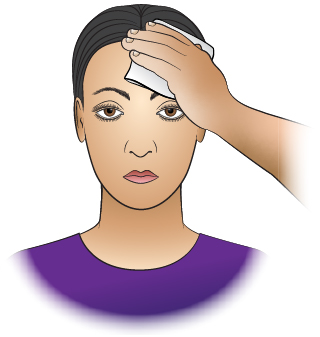
- Use a cold pack or ice bag wrapped in a wet cloth. Put it on any swelling. Do this for 20 minutes.
- Reason: prevent big lumps ("goose eggs"). Also, helps with the pain.
- Repeat in 1 hour, then as needed.
Watch Your Child Closely for 2 Hours:
- Watch your child closely during the first 2 hours after the injury.
- Have your child lie down and rest until all symptoms have cleared. Note: mild headache, mild dizziness and nausea are common.
- Allow your child to sleep if he wants to, but keep him nearby.
- Wake him up after 2 hours of sleeping. Check that he is alert and knows who you are. Also, check that he can talk and walk normally.
Diet - Start With Clear Fluids:
- Offer only clear fluids to drink, in case he vomits.
- Allow a regular diet after 2 hours.
- Exception: babies can continue breastfeeding or formula.
Pain Medicine:
- To help with the pain, give an acetaminophen product (such as Tylenol). Another choice is an ibuprofen product (such as Advil). Use as needed.
- Exception: do not give until 2 hours have passed from injury without any vomiting.
- Caution: never give aspirin to children and teens. Reason: always increases risk of bleeding.
Special Precautions For 1 Night:
- Mainly, sleep in same room as your child for the first night.
- Reason: if a problem occurs, you will recognize it if you are close by. Problems include a bad headache, vomiting or confusion. Also, look for any change in your child's normal behavior.
- Option: if you are worried, wake your child once during the night. Check how he walks and talks.
- After 24 hours, return to a normal sleep routine.
What to Expect:
- Most head trauma only causes a scalp injury.
- The deep headache usually clears in 24 hours.
- The scalp pain at the site of impact may last 3 days.
- The swelling may take a week to go away.
Call Your Doctor If:
- Pain or crying becomes severe
- Vomits 2 or more times
- Your child becomes hard to wake up or confused
- Walking or talking is not normal
- Headache lasts more than 24 hours
- You think your child needs to be seen
- Your child becomes worse