Is this your child's symptom?
- Bite from a pet, wild animal or human
- Any animal-related skin injury
Types of Wounds
- Bruise. There is no break in the skin. No risk of infection.
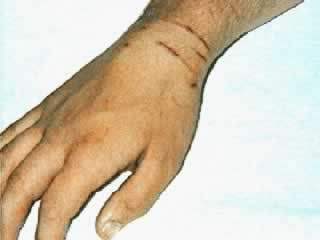
- Scrape (Abrasion) or Scratch. A wound that doesn't go all the way through the skin. Low chance of infection. Antibiotic drugs are not needed.
- Cut (Laceration). A wound that goes through the skin to the fat or muscle tissue. Some chance of infection. Most need to be seen. Cleaning the wound can help prevent this. Antibiotic drugs may be needed.
- Puncture Wound. These wounds break through the skin. Greater risk of infection. Puncture wounds from cat bites are more likely to get infected. Antibiotic drugs may be needed.
- Wound Infection. This is the main risk of an animal bite. The main finding is redness around the bite and pain. It starts 8 hours to 3 days after the bite. It can often be prevented by early, careful cleaning of the bite. This is why most animal bites need to be seen.
Types of Animal Bites
- Large Wild Animal Bites. Rabies is a disease that can kill people. Bites or scratches from any large wild animal can pass on rabies. Animals at highest risk are bats, skunks, raccoons, foxes, or coyotes. These animals may spread rabies even if they have no symptoms.
- Small Wild Animal Bites. Small animals such as mice, rats, moles, or gophers do not carry rabies. Chipmunks, prairie dogs, squirrels and rabbits also do not carry rabies. Exception: one of these small animals actually attacks a human (an unprovoked bite). Sometimes, their bites can get infected.
- Large Pet Animal Bites. Most bites from pets are from dogs or cats. Bites from other pets such as horses can be handled using this guide. Dogs and cats are free of rabies in most U.S. and Canadian cities. Stray animals are always at risk for rabies until proven otherwise. Cats and dogs that always stay indoors should be safe. The main risk in pet bites is wound infection, not rabies. Cat bites become infected more often than dog bites. Cat scratches can get infected just like a bite because cats lick their claws.
- Small Indoor Pet Animal Bites. Small indoor pets are not at risk for rabies. Examples of these pets are gerbils, hamsters, guinea pigs, or mice. Tiny puncture wounds from these small animals also don't need to be seen. They carry a small risk for wound infections.
- Human Bites. Most human bites occur during fights, especially in teenagers. Sometimes a fist is cut when it strikes a tooth. Human bites are more likely to become infected than animal bites. Bites on the hands are at higher risk. Many toddler bites are safe because they don't break the skin.
- Bat Bites and Rabies. In the U.S., 90% of cases of rabies in humans are caused by bats. Bats have spread rabies without a visible bite mark.
Animals at Risk for Rabies
- Bat, skunk, raccoon, fox, or coyote
- Other large wild animals
- Pets that have never had rabies shots and spend time outdoors
- In the U.S., rabies occurs 4 times more in cats than in dogs.
- Outdoor animals who are sick or stray
- Dogs or cats in countries that do not require rabies shots
- In the U.S. and Canada, bites from city dogs and cats are safe.
- In the U.S., there are 2 - 3 deaths from rabies per year in humans.
When to Call for Human or Animal Bite
Call 911 Now
Go to ER Now
Call Doctor or Seek Care Now
|
Contact Doctor Within 24 Hours
Contact Doctor During Office Hours
|
Self Care at Home
|
Call 911 Now
- Major bleeding that can't be stopped
- Not moving or too weak to stand
- You think your child has a life-threatening emergency
Go to ER Now
- Any scratch or cut from an animal at risk for Rabies
- Bleeding that won't stop after 10 minutes of direct pressure
Call Doctor or Seek Care Now
- Wild animal bite that breaks the skin
- Pet animal (such as dog or cat) bite that breaks the skin. Exception: minor scratches that don't go through the skin.
- Puncture wound (holes through skin) from a cat's teeth or claws
- Puncture wound (holes through skin) of hand or face
- Human bite that breaks the skin
- Finger or hand swelling that follows an animal bite
- Bite looks infected (redness or red streaks) or has a fever
- Bat contact or exposure, even without a bite mark
- Contact with a rabies-prone animal, even without a bite mark
- Minor cut or scrape and No past tetanus shots. Note: tetanus is the "T" in DTaP, TdaP, or Td vaccines.
- Your child looks or acts very sick
- You think your child needs to be seen, and the problem is urgent
Contact Doctor Within 24 Hours
- Last tetanus shot was more than 5 years ago
- You think your child needs to be seen, but the problem is not urgent
Contact Doctor During Office Hours
- You have other questions or concerns
Self Care at Home
- Bite did not break the skin or is only a bruise
- Minor scratches that don't go through the skin from a pet
- Tiny puncture wound from small pet, such as a hamster or puppy. Exception: cat puncture wound.
Care Advice for Animal or Human Bite
What You Should Know About Bites:
- Bites that don't break the skin can't become infected.
- Cuts and punctures always are at risk for infection.
- Here is some care advice that should help.
Clean the Bite:
- Wash all wounds right now with soap and water for 5 minutes.
- Also, flush well under running water for a few minutes. Reason: can prevent many wound infections.
Bleeding - How to Stop:
- For any bleeding, put pressure on the wound.
- Use a gauze pad or clean cloth.
- Press for 10 minutes or until the bleeding has stopped.
Antibiotic Ointment:
- For small cuts, use an antibiotic ointment (such as Polysporin). No prescription is needed.
- Put it on the cut 3 times a day.
- Do this for 3 days.
Pain Medicine:
- To help with the pain, give an acetaminophen product (such as Tylenol).
- Another choice is an ibuprofen product (such as Advil).
- Use as needed.
Cold Pack for Pain:
- For pain or bruising, use a cold pack. You can also use ice wrapped in a wet cloth. Apply it to the bruise once for 20 minutes. Reason: helps with bleeding, pain and swelling.
What to Expect:
- Most scratches, scrapes and other minor bites heal up fine in 5 to 7 days.
Call Your Doctor If:
- Bite starts to look infected (pus, redness, red streaks)
- Fever occurs
- You think your child needs to be seen
- Your child becomes worse