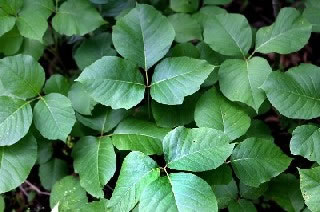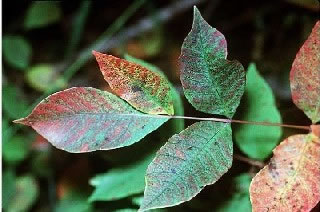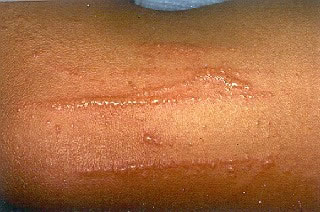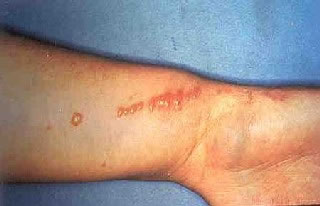
Is this your child's symptom?
- A very itchy rash with blisters
- Caused by contact with the poison ivy plant
Symptoms of Poison Ivy
- Rash is shaped like streaks or lines.
- Red streaks with weeping blisters.
- Rash found on exposed body surfaces (such as the hands). Also, can be on areas touched by the hands. Areas that can be affected in this way are the face or genitals.
- Very itchy.
- Onset 1 or 2 days after child was in a forest or field.
Cause
- Caused by oil from poison ivy, poison oak, and poison sumac plants.
- The oil is found in the leaves, stems, berries and roots of the plant.
- Oil may be carried on pet's fur.
- The oil from the plant causes the skin to itch, turn red and blister.
When to Call for Poison Ivy - Oak - Sumac
Go to ER Now
Call Doctor or Seek Care Now
|
Contact Doctor Within 24 Hours
Contact Doctor During Office Hours
|
Self Care at Home
|
Go to ER Now
- Trouble breathing or severe coughing after being near to burning weeds
Call Doctor or Seek Care Now
- Fever and looks infected (spreading redness or pus)
- Your child looks or acts very sick
- You think your child needs to be seen, and the problem is urgent
Contact Doctor Within 24 Hours
- Looks infected (spreading redness or pus) and no fever
- Swelling is severe (such as the eyes are swollen shut)
- Severe poison ivy reaction in the past
- Rash covers more than one fourth of the body
- Face, eyes, lips or genitals have a rash
- Severe itching (such as can't sleep)
- Big blisters or sores
- You think your child needs to be seen, but the problem is not urgent
Contact Doctor During Office Hours
- Rash lasts more than 3 weeks
- You have other questions or concerns
Self Care at Home
- Mild poison ivy or sumac rash
Care Advice for Mild Poison Ivy
What You Should Know About Poison Ivy:
- Poison ivy is caused by skin contact with the oil from the plant.
- The oil can also come from the fur of outdoor pets.
- Most poison ivy rashes can be treated at home.
- Here is some care advice that should help.
Steroid Cream for Itching:
- To help with the itch, put 1% hydrocortisone cream (such as Cortaid) on the rash.
- No prescription is needed.
- Use 3 times per day.
Cold Soaks for Itching:
- Soak the involved area in cool water for 20 minutes.
- You can also rub the rash with an ice cube.
- Do as often as needed to help the itching and oozing.
Allergy Medicine for Itching:
- If itching becomes severe, give an allergy medicine, such as Benadryl.
- No prescription is needed. Age limit: 1 and older.
- If needed longer than a few days, switch to a long-acting antihistamine, such as Zyrtec. Age limit: 6 months and older.
- Zyrtec dosing for 6 months to 2 years: 2.5 mL (2.5 mg) every 24 hours.
- Zyrtec dosing for 2 years and older: follow package directions.
Try Not to Scratch:
- Cut the fingernails short.
- Help your child not to scratch.
- Reason: prevent a skin infection from bacteria.
More Poison Ivy - Prevention:
- New blisters may occur several days after the first ones. This means your child probably has ongoing contact with poison ivy oil.
- To prevent it from coming back, bathe all dogs or other pets.
- Wash all clothes and shoes that your child wore on the day of contact.
Return to School:
- Poison ivy or oak cannot be spread to others.
- The fluid from the blisters or rash can't cause poison ivy.
- No need to miss any school or child care.
What to Expect:
- Most often, the rash lasts 2 weeks.
- Treatment can reduce the severity of symptoms.
- Treatment does not change how long they last.
Call Your Doctor If:
- Poison ivy lasts for more than 3 weeks
- It looks infected
- You think your child needs to be seen
- Your child becomes worse