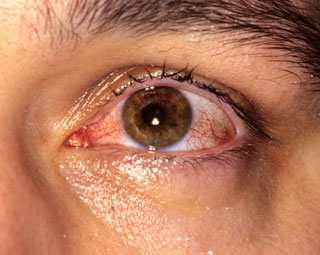
Is this your child's symptom?
- Red or pink color of the white of the eye without any pus
- The eye looks irritated
- May have increased tears (a watery eye)
- Eyelid may be puffy (mildly swollen)
- No pus or yellow discharge
- Not caused by an eye injury
Causes of Pinkeye (Red Eye)
- Pinkeye Defined. When the white of the eye becomes pink or red, it's called pinkeye. Conjunctivitis is the medical name for pinkeye. The conjunctiva is the membrane that covers the white of the eye. It becomes pink or red when it is infected or irritated. Pinkeye (conjunctivitis) has many causes.
- Viral Conjunctivitis is the main cause of pink or red eyes without pus. Most often, it is part of a cold.
- Bacterial Conjunctivitis. Pinkeye plus the eyelids are stuck together with pus. Most likely, this is a secondary infection of a viral conjunctivitis.
- Allergic Conjunctivitis is from pollens. Most children with eye allergies also have nasal allergies (hay fever). Symptoms include sneezing and clear nasal discharge.
- Irritant Conjunctivitis from sunscreen, soap, chlorine in pool water, smoke, or smog. Irritants can also be transferred by touching the eye with dirty fingers. Irritants can be food or plant resins.
- Contact Lens Conjunctivitis is caused by poor use of disinfectant solution or lenses kept in overnight.
- Rebound Conjunctivitis from Vasoconstrictor Eye Drop Abuse. Usually occurs in teens who use daily OTC eye drops to remove mild redness. After the medicine wears off, the blood vessels become larger than they were to begin with. Similar to the rebound nasal congestion seen in chronic nose drop abuse.
- Foreign Object. If only one side has pinkeye, an object in the eye must be considered.
- Palpebral Cellulitis (Serious). A bacterial infection of the eyelids and skin around them. Causes the lids to be very red and swollen.
When to Call for Eye - Red Without Pus
Call Doctor or Seek Care Now
|
Contact Doctor Within 24 Hours
Contact Doctor During Office Hours
|
Self Care at Home
|
Call Doctor or Seek Care Now
- Eyelid is very red or very swollen
- Nonstop tears or blinking
- Vision is blurred
- Eye pain or discomfort is more than mild
- Turns away from any light
- Fever in baby less than 12 weeks old. Caution: do NOT give your baby any fever medicine before being seen.
- Your child looks or acts very sick
- You think your child needs to be seen, and the problem is urgent
Contact Doctor Within 24 Hours
- Only 1 eye is red and lasts more than 24 hours
- Fever lasts more than 3 days
- Fever returns after being gone more than 24 hours
- You think your child needs to be seen, but the problem is not urgent
Contact Doctor During Office Hours
- Age less than 1 month old
- Redness lasts more than 7 days
- You have other questions or concerns
Self Care at Home
- Red eye is part of a cold
- Red eye is caused by mild irritant (such as soap, sunscreen, food, smoke, chlorine)
Care Advice
Treatment for Viral Eye Infections
What You Should Know About Viral Eye Infections:
- Some viruses cause watery eyes (viral conjunctivitis).
- It may be the first symptom of a cold.
- It isn't serious. You can treat this at home.
- Colds can cause a small amount of mucus in the corner of the eye.
- Here is some care advice that should help.
Eyelid Rinse:
- Cleanse eyelids with warm water and a clean cotton ball.
- Try to do this 3 times a day.
- This usually will keep a bacterial infection from occurring.
Artificial Tears:
- Artificial tears often make red eyes feel better. No prescription is needed. They can be used at any age.
- Use 1 drop per eye 3 times a day as needed. Use them after cleansing the eyelids.
- Antibiotic and vasoconstrictor eye drops do not help viral eye infections.
Eye Drops: How to Use
- For a cooperative child, gently pull down on the lower lid. Put 1 drop inside the lower lid. Then ask your child to close the eye for 2 minutes. Reason: so the medicine will get into the tissues.
- For a child who won't open his eye, have him lie down. Put 1 drop over the inner corner of the eye. If your child opens the eye or blinks, the eye drop will flow in. If he doesn't open the eye, the drop will slowly seep into the eye.
Contact Lenses:
- Children who wear contact lenses need to switch to glasses until the infection is gone.
- Reason: to prevent damage to the cornea.
Return to School:
- Pinkeye with watery discharge is harmless. There is a slight risk it could be passed to others.
- Children with pink eyes from a cold do not need to miss any school.
- Pinkeye is not a public health risk. Keeping these children home is over-reacting. If asked, tell the school your child is on eye drops (artificial tears).
What to Expect:
- Pinkeye with a cold usually lasts about 7 days.
- Sometimes, it turns into a bacterial eye infection. You can tell because the eyelids will become stuck together with pus.
- Pinkeye from an irritant usually goes away within 2 hours after it's removed.
Call Your Doctor If:
- Your child gets pus in the eye
- Redness lasts more than 1 week
- You think your child needs to be seen
- Your child becomes worse
Treatment for Mild Eye Irritants
What You Should Know About Pinkeye from Irritants:
- Most eye irritants cause redness of the eyes.
- It that will go away on its own.
- You can treat that at home.
Face Wash:
- Wash the face with mild soap and water.
- This will remove any irritants still on the face.
Eyelid Rinse:
- Rinse the eyelids with warm water for 5 minutes.
Eye Drops:
- Red eyes from irritants usually feel much better after being washed out.
- At any age, if eyes remain bloodshot, you can use some artificial tears.
- Dose: 1 drop, 3 times per day, as needed.
- If more than 6 years old, switch to a vasoconstrictor eye drop (such as Visine). No prescription is needed.
- Dose: use 1 drop. May repeat once in 8 to 12 hours. Never use for more than 3 days.
What to Expect:
- After the irritant is removed, the eyes usually return to normal color.
- This may take 1 to 2 hours.
Prevention:
- Try to avoid future contact with the irritant.
Call Your Doctor If:
- Pus in the eye occurs
- Redness lasts more than 7 days
- You think your child needs to be seen
- Your child becomes worse